Eating vegetarian in Greece
Vegetarian Greek food is not a modern accommodation. The country has been cooking without animal products for religious reasons for centuries, and the results are on every menu if you know the words.
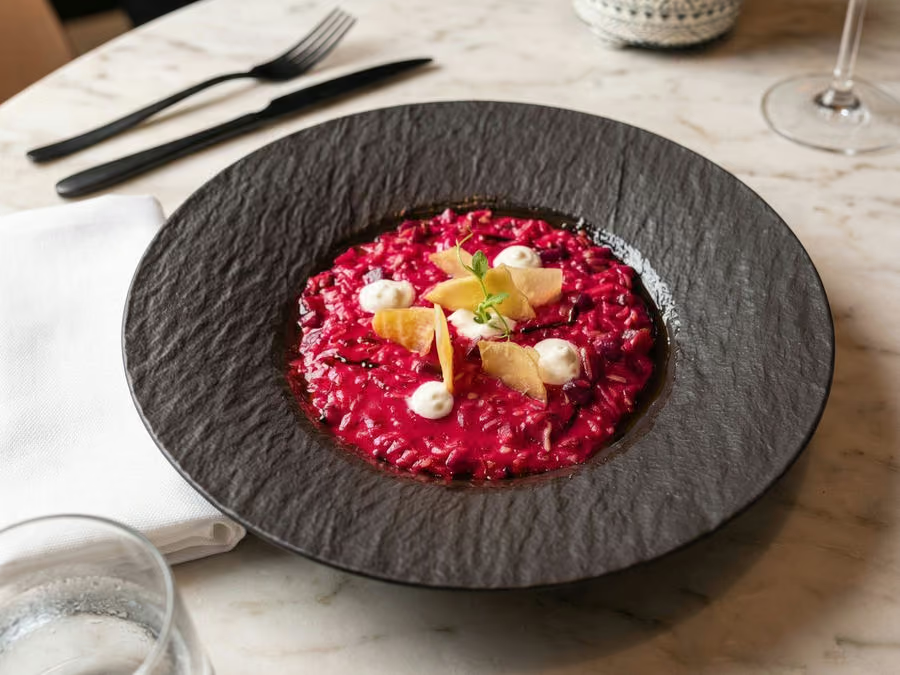
The fasting tradition did the work
The Orthodox calendar has close to two hundred fasting days a year, and on many of them meat, dairy and eggs are all set aside. Cooks needed dishes that were satisfying without any of them, and they built an entire repertoire.
The word to look for is nistisima, which means suitable for fasting. In practice a nistisimo dish is usually vegan rather than merely vegetarian, because the rules exclude dairy too.
What to order
Gigantes, the large white beans baked in tomato. Fava, the Cycladic split pea purée, which has nothing to do with fava beans. Briam, the slow-roasted vegetable tray. Dolmades made with rice rather than meat. Horta, the boiled wild greens that every Greek grew up eating and most visitors have never tried.
These are not side dishes in the way a northern European menu means it. A table of five or six of them, with bread and oil, is a complete Greek meal and the way most of the country eats at home.
The questions worth asking
Two things catch vegetarians out here. The first is stock: a vegetable dish may still have been finished with something meaty, particularly in older tavernas. The second is cheese, which arrives on top of things without being mentioned on the menu.
Ask directly and you will get a direct answer. Greek kitchens are used to the question because their own customers ask it every fasting season.
Where the island makes it easier
Cycladic cooking leans on vegetables by geography rather than by choice. Tomatoes, capers, onions, greens, pulses and herbs grow here; large animals mostly do not. That is why the vegetable dishes on an island menu often taste more considered than the meat ones.
Our own menu keeps a section built from earth and garden, including a vegan main. If you are dining with people who eat everything, that section is usually where the table agrees.
Telling us in advance
Say so when you book, not when you sit down. With notice a kitchen can plan properly rather than improvise, and the tasting menu can be adapted instead of edited. The practical details are on our FAQ page, and the full sequence is on the tasting menu page.
One honest note: Greece is easy for vegetarians and moderately easy for vegans, but it is not effortless in high season when kitchens are busy. Twenty-four hours of warning changes everything.
Breakfast and lunch, not only dinner
The rest of the day is easier than dinner. A bakery will sell you a cheese or spinach pie before nine, a rusk with tomato and oil is a complete lunch, and every taverna has a fridge of pre-cooked vegetable dishes that were made in the morning and are meant to be eaten at room temperature.
That last habit surprises visitors most. Ladera, the oil-braised vegetable dishes, are deliberately not served hot. If a plate of green beans arrives warm rather than steaming, nothing has gone wrong; that is how they are supposed to taste.
One final practical note for travellers. Greek portions of vegetable dishes are generous, and a table that orders four or five of them will eat better and pay less than one that orders a main course each. That is not a compromise for vegetarians here; it is simply how the food was designed to be shared.