Greek desserts beyond baklava
Greek desserts are built on three ideas: syrup, custard and honey. Once you know which one a sweet belongs to, the rest of the list stops being intimidating.
The syrup family
Baklava is the ambassador: filo, nuts, butter, and syrup poured over the whole tray. The good versions are crisp rather than wet, use walnuts or pistachios rather than a mixture of whatever was cheapest, and carry as much citrus and clove as sugar.
The same family includes kataifi, made with shredded pastry that looks like fine hair, and ravani, a semolina cake soaked after baking. All of them keep well, which is why they exist in this form: they were made for feast days and needed to survive a week.
The custard family
Galaktoboureko is semolina custard baked inside filo and doused in lemon syrup, and it is the one most Greeks would save if they could keep only one. Bougatsa is its breakfast cousin, sold by weight in the north and eaten standing up.
Both are best warm, and neither survives refrigeration well. If a restaurant offers you galaktoboureko straight from the fridge, order something else.
Honey, and the fried things
Loukoumades are small yeasted doughnuts fried to order and dressed with honey, cinnamon and often walnuts. They are the oldest recorded dessert in the country, and versions of them were handed to victorious athletes in antiquity.
Honey does most of the work in older Cycladic sweets, because sugar arrived late and expensively on the islands. Thyme honey from these hills is strong enough to be a flavour rather than just a sweetener.
Spoon sweets, the ones nobody explains
Glyka tou koutaliou are whole fruits preserved in syrup: sour cherry, bitter orange, fig, even young walnuts. They arrive on a small dish with a glass of cold water, usually as hospitality rather than as a course.
The correct way to eat one is slowly, with the water alongside, and to accept a second only if you mean it. In a village this is a small ceremony, not a snack.
What we do with all this
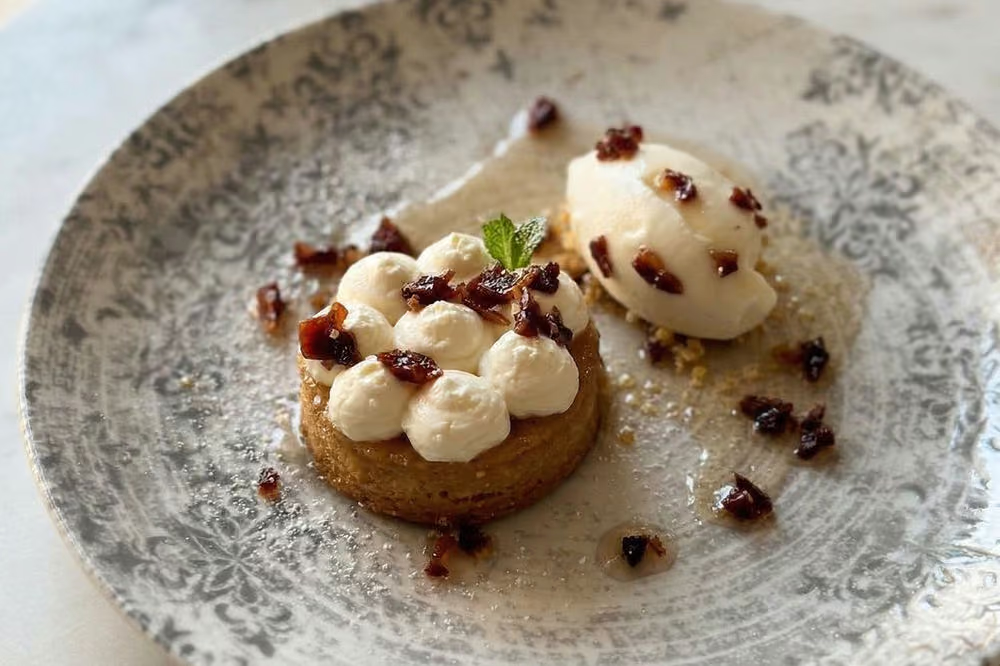
A modern Greek kitchen tends to keep the flavours and cut the sugar by half. Our own desserts sit on the menu alongside the savoury courses, and the six-course tasting menu ends on one of them rather than on a cheese trolley.
If you are ordering at the end of a long evening, share. Greek sweets are richer than they look, and two spoons of something excellent beats a whole plate of something you cannot finish. Our evening guide assumes the same about the rest of the day.
What to drink with them
Greek coffee is the traditional partner, served in a small cup with the grounds still in it and never stirred once it arrives. Ask for metrio unless you have a strong opinion; it is the middle sweetness and the safest first order.
After a heavy dessert most Greeks reach for something clear and strong instead: tsipouro, or raki on the islands. Vinsanto from Santorini is the wine answer, sweet and high in acid, and it handles anything with nuts and syrup without collapsing.
A last word on quantity. Greek sweets are sold by weight in bakeries, which means you can buy a single piece rather than a box. Two hundred grams between two people, eaten the same day, is the right amount, and it is how most Greeks actually buy them. Anything kept until tomorrow will have softened.