What Greeks mean by pita
Ask what Greek pita is and you will get two different answers, both correct. The word covers the bread you know and a whole family of pies you probably do not.
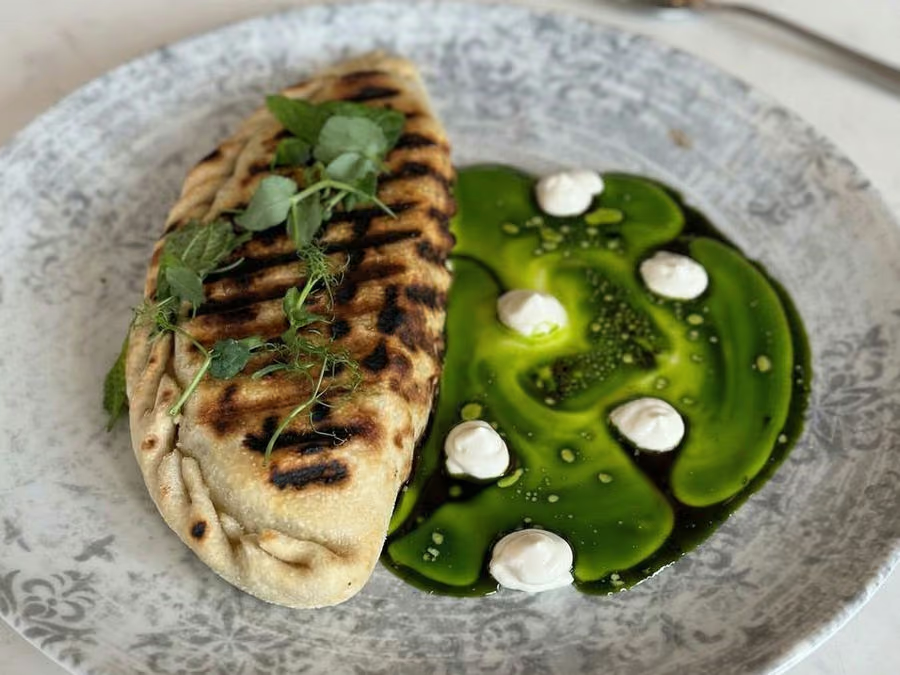
One word, two foods
Pita means pie as often as it means bread. A souvlaki is wrapped in one kind; spanakopita, the spinach pie every Greek grandmother makes differently, is the other kind. Same word, different worlds, and menus rarely explain which one is coming.
The link between them is shape rather than dough. Anything flat and round can be a pita, which is why the term stretched to cover both a griddled bread and a tray of layered pastry.
The pies
Every region has its own. Spinach and feta is the famous one, but there is cheese pie, leek pie, meat pie, chicken pie, and in the mountains pies made with wild greens gathered by hand. The filling tells you where you are on the map.
The pastry tells you who made it. Commercial filo comes in sheets; the older way is to roll it out with a long thin pin until it is nearly transparent, which takes practice and a large table. The handmade version is thicker, uneven and much better.
The bread
The flatbread most visitors call pita is a street food companion rather than a table bread. It is cooked fast on a hot surface, brushed with oil, and used to hold something else: souvlaki, gyros, grilled vegetables.
What you meet at a Greek dinner table is more often a country loaf or barley rusk, which is a different tradition entirely and one built for keeping rather than for eating warm.
What happens on an island
Cycladic pies are shaped by scarcity. There is little grazing land and less fresh water, so the fillings lean on cheese, onion, herbs and whatever the season gives, and the pastry is often lighter because flour was precious.
Our own kitchen keeps a Mykonian pita on the menu, which is our reading of that island idea rather than a museum piece. If you want to see how the whole Cycladic pantry fits together in one sitting, the six-course tasting menu does that job.
How to order it properly
If a menu says pita and the price looks like a snack, it is bread. If it looks like a plate, it is pie. If you are unsure, ask whether it is filo or bread, and any Greek server will know exactly what you mean.
Pies are eaten at every hour here, which surprises visitors. A slice at nine in the morning is completely normal, and it is one of the better breakfasts on this island. Our evening guide to Mykonos Town covers where the day starts.
One last note on temperature. A pie straight from the oven is impressive and hard to taste; the same pie twenty minutes later, still warm, is when the filling settles and the pastry stops fighting you. Greeks wait. It is worth copying.
How to buy a good one
Buy from a bakery rather than a supermarket, and look for uneven edges: machine-made pastry is perfectly regular, handmade filo never is. A good pie is heavy for its size and leaves a little oil on the paper.
Early is better. Bakeries make pies for the morning trade, and what is left at four in the afternoon has usually been sitting under a warm light for hours. If the counter is busy, the pie is fresh, which is the oldest rule in food and still the most reliable.