Kopanisti: the cheese Mykonos made
Kopanisti is the cheese this island gave the rest of Greece. It is soft, salty and startlingly peppery, and the heat has nothing to do with pepper.
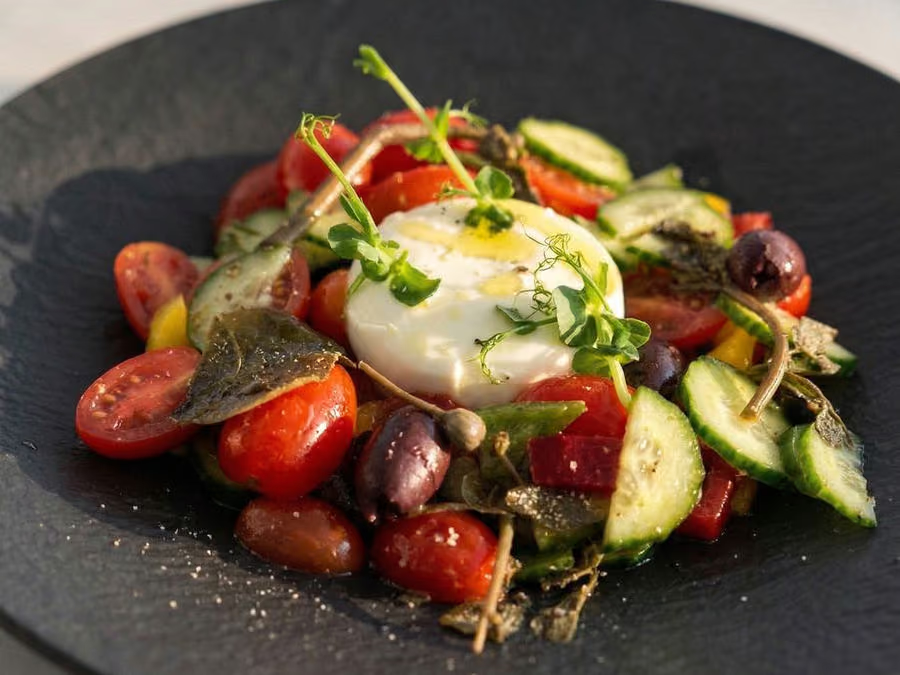
What is kopanisti?
Kopanisti is a soft, spreadable cheese from the Cyclades, and the Mykonian version carries a protected designation of origin. It is pale, a little grainy, and much saltier than the fresh cheeses most visitors know. You will meet it on a rusk before you meet it on a plate.
The name comes from the verb to pound. During maturing the cheese is worked by hand again and again, which folds the surface mould back through the paste. That repetition is the whole technique, and it is why no two makers produce quite the same thing.
Why does it taste hot?
Because it is fermented, not spiced. The peppery bite develops as the mould matures the fat, in the same family of processes that gives a blue cheese its edge, and in the Cyclades heat and salt push it further. Nothing is added. The cheese does it to itself.
That also explains the range you will taste around the island. A young kopanisti is mild and lactic; an older one can make you sit up. Neither is wrong.
How it is eaten here
Traditionally as meze: spread thickly on a barley rusk, with a slice of tomato and a good oil, next to something cold and anise-scented. It is farmers' food and boatmen's food, and it was designed to survive a Cycladic summer without refrigeration.
At the table it does the job that salt and heat do in other cuisines. A very small amount lifts tomatoes, or a warm bread, or a plate of greens.
Kopanisti in a modern Greek kitchen
Contemporary Greek cooking tends to treat kopanisti as a seasoning rather than a cheese course, because a spoonful carries a lot of flavour. Our own kitchen works the same way with island ingredients, and what appears depends on the week and the producer. The current menu is the honest answer to what is on the table tonight.
If you want to understand Cycladic food quickly, the six-course tasting menu is the shortest route: it is built around the same sea and the same farms.
Not to be confused with
Kopanisti is not feta, and the difference is more than texture. Feta is firm, brined and made to be cut; kopanisti is soft, air-matured and made to be spread. A visitor who orders one expecting the other is always surprised, usually happily.
It is also not xinomyzithra, the sour Cretan whey cheese it is sometimes compared to. That one is tangy from acidity. Kopanisti is peppery from mould, which is a different sensation entirely: it arrives late, at the back of the palate, and it lingers.
The Cyclades hold a handful of other cheeses worth asking for while you are here, among them the hard, nutty San Michali from Syros. Most of them never leave the islands in any quantity, which is reason enough to try them on the spot.
Buying some to take home
Buy it from a shop that sells it loose rather than sealed, ask for a taste, and say whether you want it young or strong. It travels badly in a hot car and beautifully in a cool bag. Eat it within a week and keep it wrapped, because it will happily perfume everything in the fridge.
If you are planning a day around food while you are here, our evening guide to Mykonos Town lays one out hour by hour.